
Wandering Singers by Sarojini Naidu: Summary and Analysis
Wandering Singers by Sarojini Naidu is a poem that celebrates the freedom and simplicity of a nomadic life dedicated to music.
Love and Death by Sarojini Naidu explores the eternal struggle between the power of love and the inevitability of death.
Bangle Sellers by Sarojini Naidu is a lyrical tribute to the beauty, strength, and cultural significance of Indian womanhood.
Coromandel Fishers by Sarojini Naidu stands as a timeless tribute to the indomitable spirit of the fishermen.
Hunger by Namdeo Dhasal is a powerful expression of the struggles and frustrations faced by the Dalit community.
The emergence of Dalit literature across various genres has challenged the dominant literary traditions.
Dalit Consciousness is rooted in the idea of rejecting exploitation, marginalization, and inequality, aiming to establish social equality.
Dalit aesthetics stands as a powerful testament to the resilience, creativity, and unwavering spirit of the Dalit community.
Welcome to a literary odyssey through the corridors of GATE 2024 English Literature examination!
The Zoya Factor is a journey of self-discovery, a witty critique of society, and a timeless reflection on love and luck.
Tintin in Tibet transcends the boundaries of a simple adventure narrative and It invites us to embark on a journey of introspection.
Professor Shonku and the UFO takes us on a thrilling adventure beyond the stars, only to land squarely on the terrain of human nature.
The Never Never Nest cleverly uses humour to satirize the rampant materialism and consumerism of modern society.
John Lennon’s “Imagine” paints a vivid picture of a world transformed, built on the cornerstone of human imagination.
Children’s literature is a fascinating and diverse field of study that has been the subject of much debate and controversy.
Matsuo Bashō’s “The Old Pond” stands as a testament to the power of simplicity and observation.
Matsyagandhi transcends the boundaries of a simple narrative, offering a powerful commentary on various social and personal struggles.
Judith Butler’s groundbreaking theory of gender performativity challenges long-held beliefs about how we understand and experience gender.
Wisława Szymborska’s “Possibilities” has resonated with readers for generations, garnering international acclaim and solidifying its place in the literary canon.
In Gabriel Okara’s poem, “You Laughed and Laughed and Laughed,” it becomes a weapon, a shield, and a bridge across a cultural chasm carved by colonialism.
The poem Advice to Women by Eunice de Souza suggests that keeping cats can teach one to cope with the uniqueness of relationships.
Sarojini Naidu’s “Awake” resonates not just within the echoes of history, but within our own hearts.
“Palanquin Bearers” transcends its simple setting to unveil a tapestry of emotions and cultural nuances.
Paratextuality transcends the confines of the written word, encompassing the entirety of those elements that accompany and frame a literary work.
Jacques Lacan’s concept of the “mirror stage” stands as a cornerstone in psychoanalytic theory.
Rhizome philosophy rejects the singular, authoritative map of arborescent thinking.
This blog delves into the rich terrain of Bhabha’s thought, navigating the nuances of hybridity theory and its implications for understanding cross-cultural interactions.
“The Fakeer of Jungheera” is more than just a poem; it’s a powerful social commentary and a passionate narrative about love, rebellion, and tragic fate.
“Clouds and Waves” is a lyrical journey through a child’s world, beautifully capturing the interplay of imagination, adventure, and love.
Architextuality, a key element within the broader concept of transtextuality, reveals the intricate relationship between a text and its genre.
TransTextuality emerges as a dynamic phenomenon, blurring the lines between written, spoken, and visual expressions.
David Rubadiri’s evocative poem, “An African Thunderstorm,” transports us to the heart of a rural African village as it braces itself for the raw power and cleansing fury of a brewing storm.
In the grand tapestry of literary devices, metatextuality stands as a vibrant thread that weaves together self-awareness and audacious commentary.
we delve deeper into Male Gaze VS Female Gaze, exploring their impact on media, and how they shape our perceptions.
“The Telephone Conversation by Wole Soyinka” is a satirical poem penned in 1963, that addresses the issue of racism.
Hunger by Jayanta Mahapatra is a stark and unsettling exploration of the devastating effects of poverty, particularly on the most vulnerable members of society.
Sita by Toru Dutt transcends mere retelling. She delves into the emotional landscape of the abandoned queen.
The Lotus by Toru Dutt encapsulates the essence of Indian heritage and pride within the realms of English poetry.
Gynocriticism is not simply a critical approach; it’s a journey of discovery, a roadmap to a literary landscape where women’s voices take centre stage.
Avant-Garde gives a powerful message: art can be anything, anything bold, anything strange, anything beautiful.
As per intentional fallacy, any work is not limited to the author’s intent but should be assessed by how effectively it communicates with its audience.
The affective fallacy underscores the importance of perceiving a work of art independently of the emotions it evokes, advocating for a more objective analysis centred on the inherent qualities and craftsmanship
Exploring the fascinating world of Mikhail Bakhtin and Dialogism, we delve into the profound insights of a thinker who redefined our understanding of human communication.

Language, an incredible tool enabling us to share ideas and feelings, holds hidden layers beyond mere words—enter “Langue and Parole.

The concept of Signifier and Signified transformed how language and signs were perceived.
This influential theory has not been without its share of critique, sparking ongoing debates. Additionally, its principles continue to be applied and adapted in various modern contexts.
Ever wonder how language works? How do sounds and words weave meaning? That’s the puzzle the Prague School cracked!
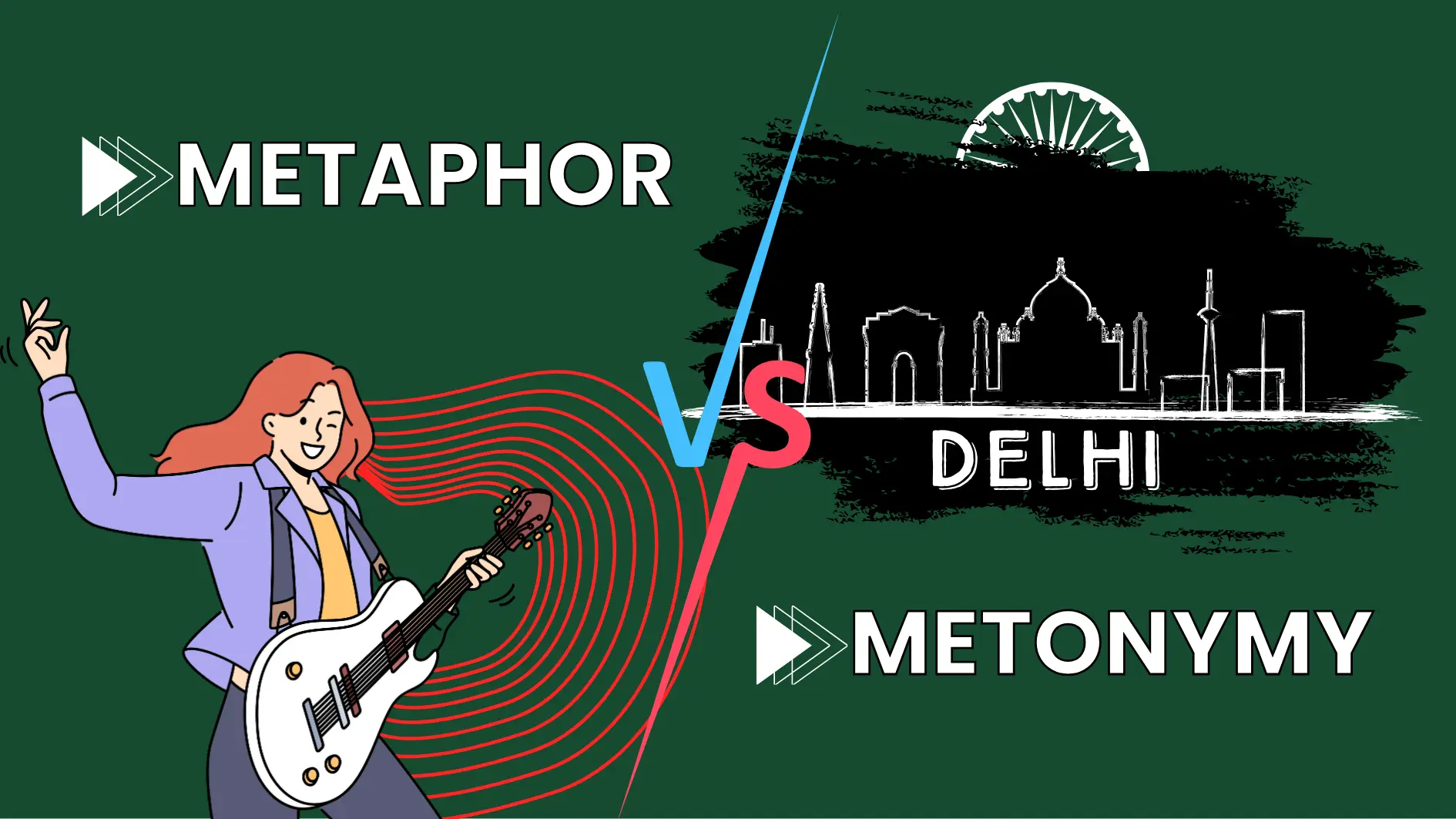
In this blog, we’ll look at Metaphor-Metonymy in simple ways, exploring what Jakobson said about them and why they matter in our everyday conversations.
New Criticism was a prominent literary theory that emerged in the early to mid-20th century, primarily in the United States.
The early 20th century witnessed a seismic shift in the landscape of literary theory with the emergence of Russian Formalism (often referred to as, “formalism”).
Literariness simply refers to the qualities that make a work of literature distinct from other forms of writing.
The idea behind defamiliarization is to present everyday objects, events, or language in a way that challenges automatic perception.
The Harp of India is a passionate and patriotic tribute to India, and it reflects the poet’s deep love for his homeland and his concern for its social and political issues during the British colonial period.
Suleri sets the stage by emphasizing the significance of understanding feminism within the context of postcolonial nations.
The poem revolves around the majestic presence of a beloved casuarina tree and the memories it evokes in the poet’s mind.
Anita Desai’s “Cry, the Peacock” is a captivating novel that delves into human psychology’s intricacies and societal norms’ constraints in post-colonial India.
Discover the captivating story of “Rajmohan’s Wife,” a novel that explores the themes of love, rebellion, and social norms in colonial India.
Thank you for expressing your interest in joining LitforIndia as a Summer Intern. We appreciate your enthusiasm and eagerness to contribute to our team.
Unfortunately, this year's application process has concluded, and we are no longer accepting submissions. We encourage you to consider applying again next year during our open application period, which typically begins in March.
We value your interest in our organization and look forward to the possibility of welcoming you to our team in the future.
Thank you once again for your interest in LitforIndia.