
“Atithi” by Rabindranath Tagore: Summary and Analysis
Rabindranath Tagore’s “Atithi” (The Guest) is a short story that is believed to have been written during Tagore’s highly prolific period between 1890 and 1920.
‘The Homecoming’ stands out as a timeless exploration of familial ties, cultural identity, and the evolving dynamics within relationships.
Rabindranath Tagore’s “Paper Boats” (1913) is a beautiful poem that captures the essence of childhood wonder and imagination.
A Critical Appreciation of Indian Weavers is one of the most important and meticulous tasks which needs a thorough reading of the poem.
Indian Weavers by Sarojini Naidu is a beautiful and evocative poem that captures the essence of Indian craftsmanship through the metaphor of weaving.
The journey from the Origin and the Development of Indian English literature has come a long way from its colonial beginnings.
In the Bazaars of Hyderabad by Sarojini Naidu is a poem that talks about the life of ordinary street vendors thriving for life.
Wandering Singers by Sarojini Naidu is a poem that celebrates the freedom and simplicity of a nomadic life dedicated to music.
Love and Death by Sarojini Naidu explores the eternal struggle between the power of love and the inevitability of death.
Bangle Sellers by Sarojini Naidu is a lyrical tribute to the beauty, strength, and cultural significance of Indian womanhood.
Coromandel Fishers by Sarojini Naidu stands as a timeless tribute to the indomitable spirit of the fishermen.
The Zoya Factor is a journey of self-discovery, a witty critique of society, and a timeless reflection on love and luck.
Tintin in Tibet transcends the boundaries of a simple adventure narrative and It invites us to embark on a journey of introspection.
Professor Shonku and the UFO takes us on a thrilling adventure beyond the stars, only to land squarely on the terrain of human nature.
Matsyagandhi transcends the boundaries of a simple narrative, offering a powerful commentary on various social and personal struggles.
The poem Advice to Women by Eunice de Souza suggests that keeping cats can teach one to cope with the uniqueness of relationships.
Sarojini Naidu’s “Awake” resonates not just within the echoes of history, but within our own hearts.
“Palanquin Bearers” transcends its simple setting to unveil a tapestry of emotions and cultural nuances.
“The Fakeer of Jungheera” is more than just a poem; it’s a powerful social commentary and a passionate narrative about love, rebellion, and tragic fate.
“Clouds and Waves” is a lyrical journey through a child’s world, beautifully capturing the interplay of imagination, adventure, and love.
Hunger by Jayanta Mahapatra is a stark and unsettling exploration of the devastating effects of poverty, particularly on the most vulnerable members of society.

The poem A Poem for Mother by Robin Singh Ngangom is featured in the collection of poetry titled “Words and Silence,” published in 1998.
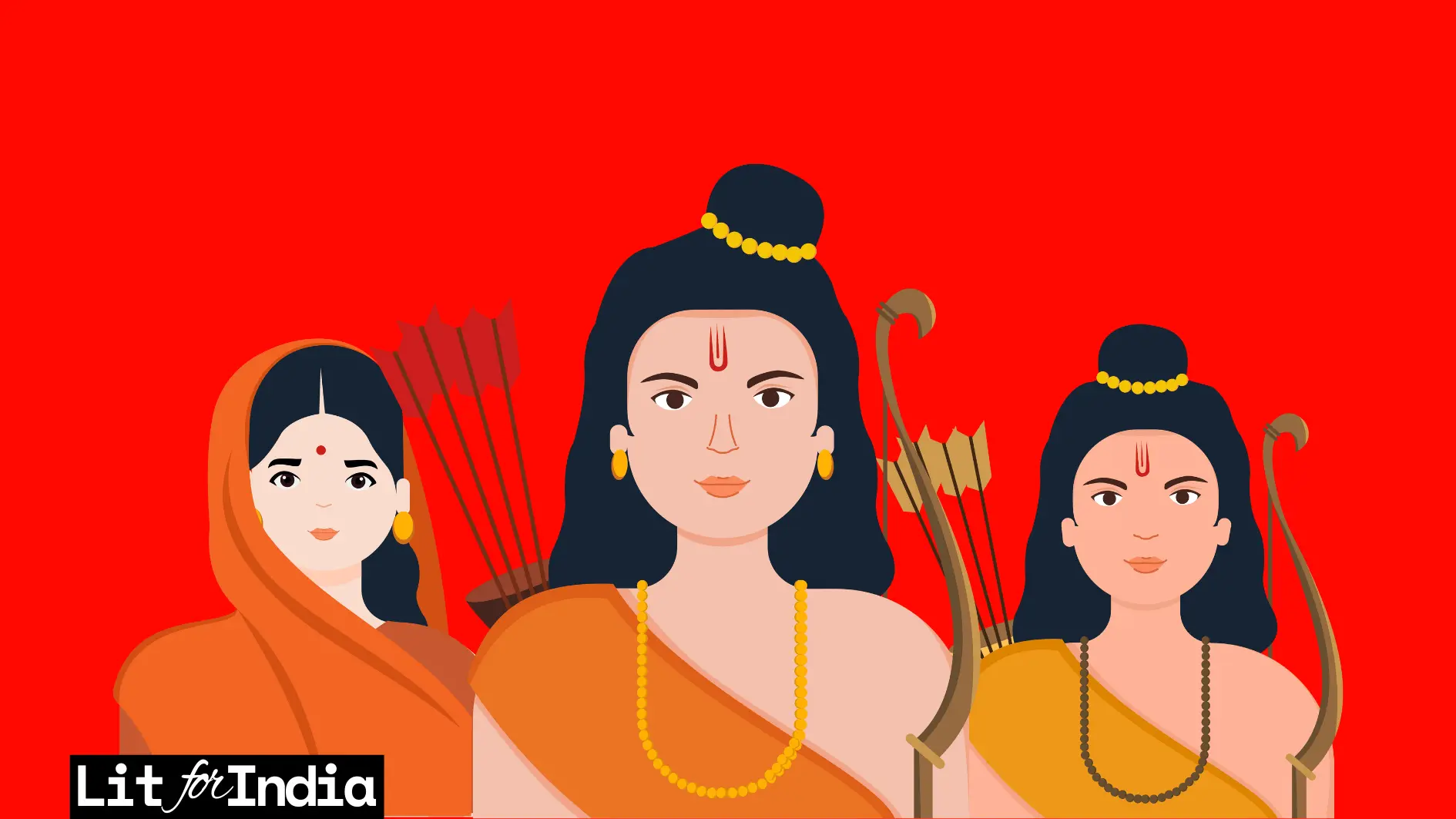
Sita by Toru Dutt transcends mere retelling. She delves into the emotional landscape of the abandoned queen.
The Lotus by Toru Dutt encapsulates the essence of Indian heritage and pride within the realms of English poetry.
“The Free Radio” by Salman Rushdie is a poignant narrative intricately woven with socio-political commentary.
Philosophy by Nissim Ezekiel explores the complexities of life and the philosophical musings that accompany the human experience.
“The Tree of Life” by Toru Dutt stands as a poetic masterpiece, weaving together the threads of nature, spirituality, and the human experience.
Obituary by AK Ramanujan is a poignant exploration of the complexities and contradictions inherent in human existence.
Separation by Rabindranath Tagore is a poignant exploration of the emotional intricacies entwined with the experience of parting.
Taledanda is an amazing Kannada play written by Girish Karnad, a famous playwright.
Here we are going to deal with the summary of Transformation by Sri Aurobindo along with the themes, structures, forms, and literary devices used in it.
The poem “The Pardah Nashin” by Sarojini Naidu is about an Indian woman who lives a secluded life behind the veil, the “pardah”.
Girish Karnad’s “Nagamandala” is a mesmerizing play that delves into the intricacies of human desires, the power of storytelling, and the transformation of individuals in a traditional, rural setting.
The Striders is a saddening poem by A.K. Ramanujan that reflects upon the struggles and displacement experienced by a group of people.
The Night of the Scorpion by Nissim Ezekiel is a compelling and thought-provoking poem that delves into the themes of superstition, unity, and the human spirit.
The Harp of India is a passionate and patriotic tribute to India, and it reflects the poet’s deep love for his homeland and his concern for its social and political issues during the British colonial period.
“Goodbye Party for Miss Pushpa T.S.” by Nissim Ezekiel is a satirical poem that provides a humorous critique of the Indian bureaucracy and the use of the English language in official settings.
This poem describes a journey that begins as a pilgrimage with high hopes of enlightenment and making burdens lighter. Here is a lucid summary of Enterprise.
The poem revolves around the majestic presence of a beloved casuarina tree and the memories it evokes in the poet’s mind.
Anita Desai’s “Cry, the Peacock” is a captivating novel that delves into human psychology’s intricacies and societal norms’ constraints in post-colonial India.
Discover the captivating story of “Rajmohan’s Wife,” a novel that explores the themes of love, rebellion, and social norms in colonial India.
Thank you for expressing your interest in joining LitforIndia as a Summer Intern. We appreciate your enthusiasm and eagerness to contribute to our team.
Unfortunately, this year's application process has concluded, and we are no longer accepting submissions. We encourage you to consider applying again next year during our open application period, which typically begins in March.
We value your interest in our organization and look forward to the possibility of welcoming you to our team in the future.
Thank you once again for your interest in LitforIndia.